Non-surgical treatments
Medical Hair Loss Treatments UK
Clinician-led prescriptions and in-clinic therapies for pattern hair loss — assessed individually at a free consultation, with honest sequencing before any surgery is discussed.
In brief
Medical hair loss treatment at HTC means evidence-based options — prescriptions and in-clinic procedures — chosen after your history, scalp examination, and goals are reviewed. Not every patient needs surgery first. A GMC-registered clinical team should assess suitability before you start or combine therapies.
Your non-surgical pathway
Pattern hair loss is progressive. A sensible medical pathway starts with diagnosis (what type of loss, how active it is, scalp health), then treatment options matched to that picture, then review so you know what is working and what to adjust.
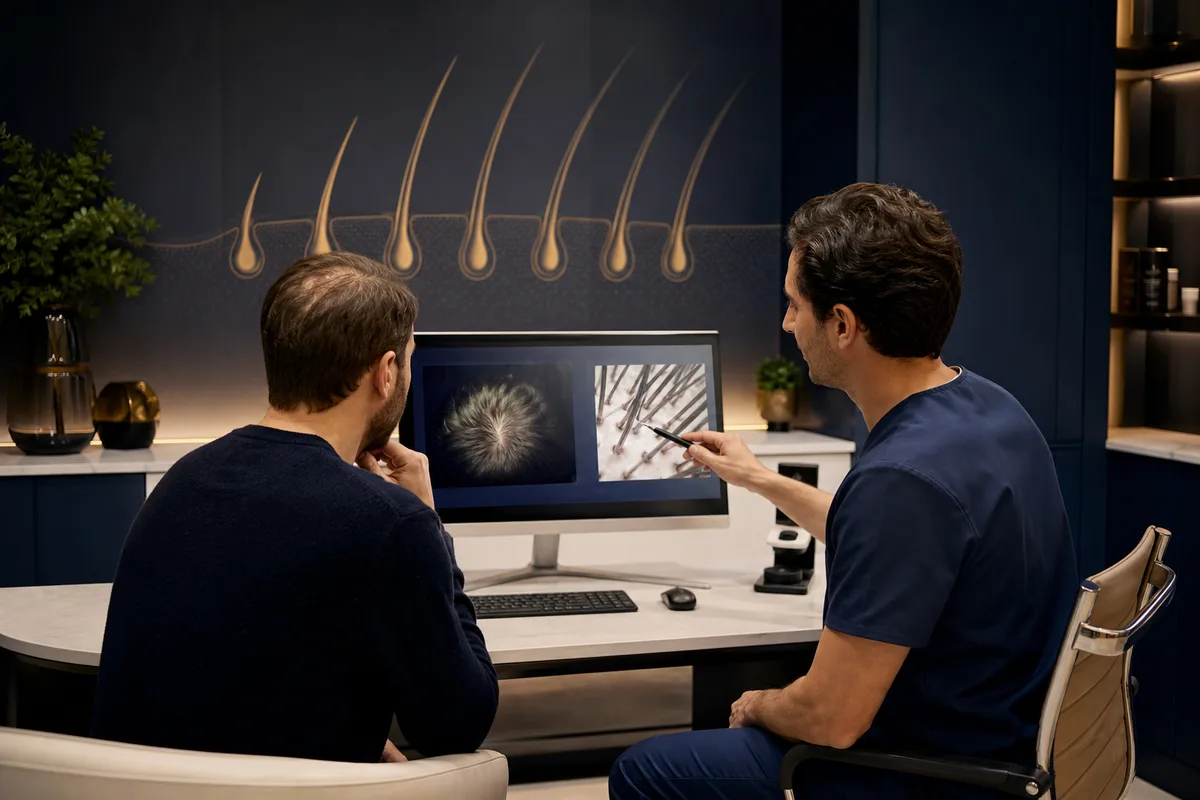
At HTC, that pathway is clinician-led — not a product menu. We use Proscopic imaging and examination where appropriate, then explain what may help, what may not, and what to monitor over time.

Prescriptions vs in-clinic treatments
Prescription therapies (such as minoxidil or finasteride-based options, where clinically appropriate) are taken at home on an ongoing basis. They require monitoring, realistic timelines, and an understanding that results vary — and that stopping treatment can allow loss to resume.
In-clinic procedures (such as PRP, microneedling, or device-based options we offer) are performed at our UK clinics on a planned schedule. They are not interchangeable with surgery; for some patients they support density or scalp health, for others they are stepped through before or alongside other care.
We do not prescribe or recommend treatments online without assessment. Suitability, contraindications, and sequencing are confirmed at consultation.
When medical treatment comes before surgery
Surgery can be the right answer — but not always first. Medical or in-clinic care may be discussed when:
- Hair loss is still advancing quickly and the pattern is not yet stable
- Loss is diffuse (common in women) and the priority is diagnosis and stabilisation
- Scalp conditions (redness, dermatitis, infection) need treatment before any procedure
- You prefer to try non-surgical options first, or want to protect native hair around a future transplant plan
- Underlying causes (thyroid, nutritional, traction) should be ruled in or out before committing to surgery
We will advise against surgery when it is not the right step — that is part of an honest consultation, not a sales conversation.

Honest expectations
- Medical treatments usually require months of consistent use before change is visible — they are not instant fixes
- Results vary by patient; we do not guarantee density, regrowth, or that one product suits everyone
- Combining therapies can be appropriate, but sequencing matters — more is not always better
- Ongoing pattern hair loss can continue in untreated areas; long-term planning matters
- Pricing is personalised after assessment — we do not publish fixed menu prices for medical plans online
Frequently asked questions
Can I combine medical treatments with each other or with surgery?
Sometimes, when clinically appropriate. Established medical options and hair transplantation serve different roles; research also explores combinations such as PRP with minoxidil or medical therapy alongside surgery — but sequencing matters. HTC plans treatment on clinical grounds, not upsell.
Is PRP worth it for hair loss?
For suitable patients, PRP may help hair density and count in some cases of pattern hair loss — particularly earlier-stage loss — but results vary and protocols differ between clinics. PRP is not a replacement for a hair transplant; suitability is decided after assessment.
How long until I see results from medical treatment?
Not quickly. Medical therapies for pattern hair loss typically need consistent use over months before you and your clinician can judge response. Timelines differ by treatment and individual factors — we set expectations at consultation rather than promising a date.
How much do medical hair loss treatments cost at HTC?
There is no single price. Cost depends on which therapies are appropriate, how they are sequenced, and your clinical picture. Your free consultation includes examination and indicative pricing for a personalised plan — we do not publish fixed menu prices online.
Will medical treatment stop me needing a hair transplant?
Sometimes medical or in-clinic care is enough for a patient’s goals; sometimes surgery is discussed later, or alongside therapy to protect native hair. No honest clinic can promise you will never need surgery — candidacy and goals are reviewed individually.
Non-surgical options
Evidence-based treatments, assessed individually.
Every treatment below has a published evidence base. Suitability is confirmed through a free clinical consultation — not online.
Start with assessment, not a product list.
Your free consultation covers your hair loss pattern, medical history, and goals — with a recommendation based on evidence and suitability, not pressure to buy.
Personalised pricing is discussed after consultation. No hidden fees.
Free consultation
Start with clinical clarity.
Book a free consultation to discuss suitability, treatment options, and personalised next steps with a clinician-led clinic.
Confidential enquiry. No obligation. Pricing is personalised after consultation.