
Non-surgical support
PRP / PRF Hair Treatment UK
Platelet-rich plasma and fibrin scalp injections discussed after assessment — as standalone supportive care or alongside medical therapy and transplant planning, with measured expectations at a free consultation.
In brief
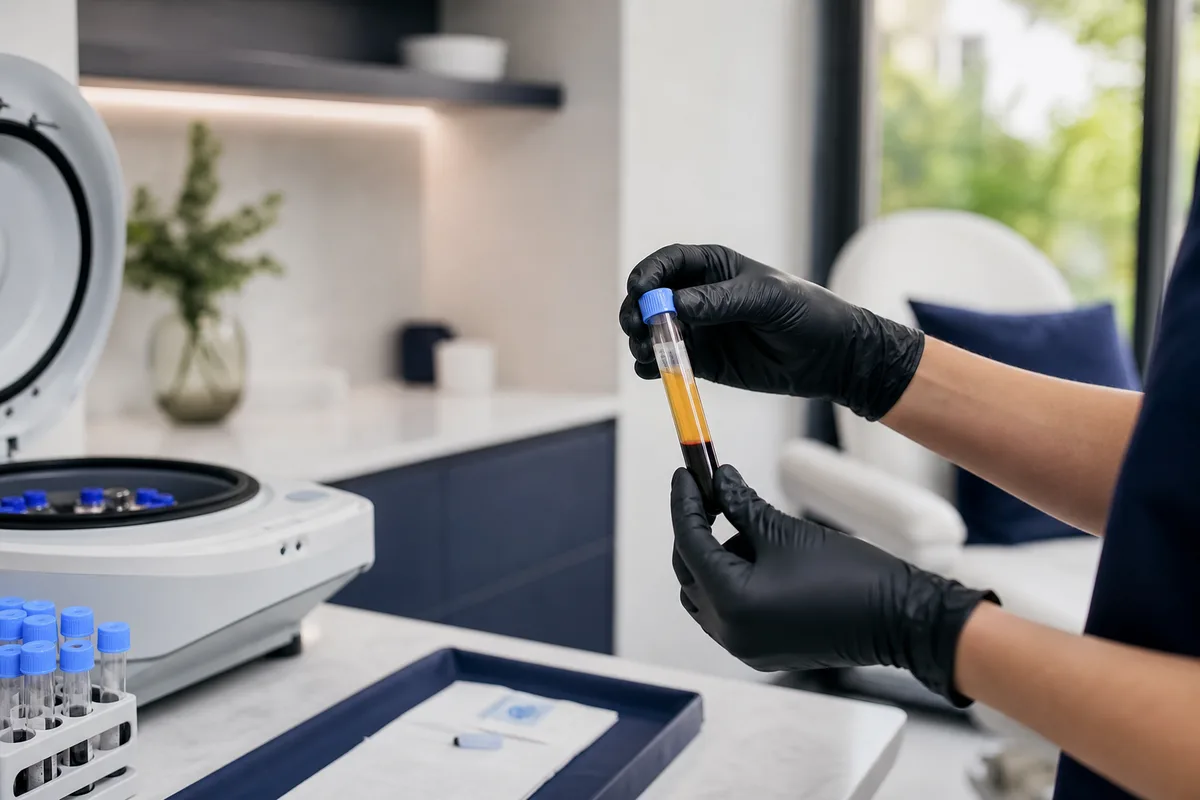
PRP (platelet-rich plasma) and PRF (platelet-rich fibrin) use a concentrated preparation from your own blood, re-injected into the scalp to support the hair follicle environment. Research suggests PRP may improve hair density in androgenetic alopecia for some patients — particularly earlier-stage thinning — but protocols vary and results are not guaranteed. It is not a substitute for hair transplant surgery when redistribution of follicles is the goal.
What is PRP / PRF hair treatment?
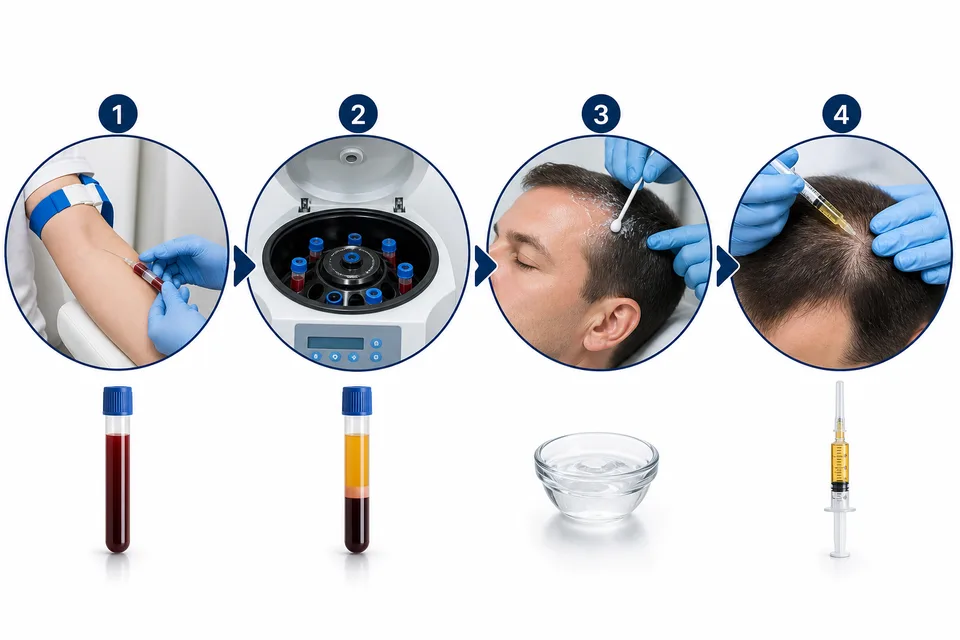
Your blood contains platelets, which carry growth factors involved in tissue repair. In a PRP session, a small sample is drawn, processed in a centrifuge to concentrate the platelet-rich layer, and that preparation is injected into areas of thinning.
PRF is a related preparation with a slightly different processing profile; at HTC both are discussed in clinical context after examination — not sold as interchangeable “boosters” without assessment.
Treatment is autologous (from your own body), which avoids donor-matching issues but does not mean zero risk. Injection technique, scalp condition, and medical history all matter.
Who may PRP / PRF suit?
PRP tends to be most relevant when discussed after proper assessment. Common consultation reasons include:
- Early to moderate pattern thinning (androgenetic alopecia)
- Non-surgical support before committing to transplant surgery
- Adjunct care alongside medical therapy such as minoxidil or finasteride where clinically appropriate
- Post-transplant or intraoperative support when included in a surgical plan
- General thinning where follicles may still be active — not complete baldness
PRP is less likely to be appropriate if hair loss is advanced with inactive follicles, if you have certain blood disorders or medications affecting platelets, or if there is active scalp infection or inflammation. We will say clearly at consultation if PRP is not the right step — or if medical therapy or surgery should come first.
What happens during treatment?
Your pathway starts with a free consultation: history, scalp examination, and an honest discussion of what PRP can and cannot achieve for you.
On treatment day, a small blood sample is taken (similar to a routine blood test). The sample is processed in clinic — typically around 10 minutes — then the treatment area is cleansed and numbed for comfort. Concentrated PRP or PRF is injected into the planned scalp zones. The injection phase often takes 20–30 minutes.
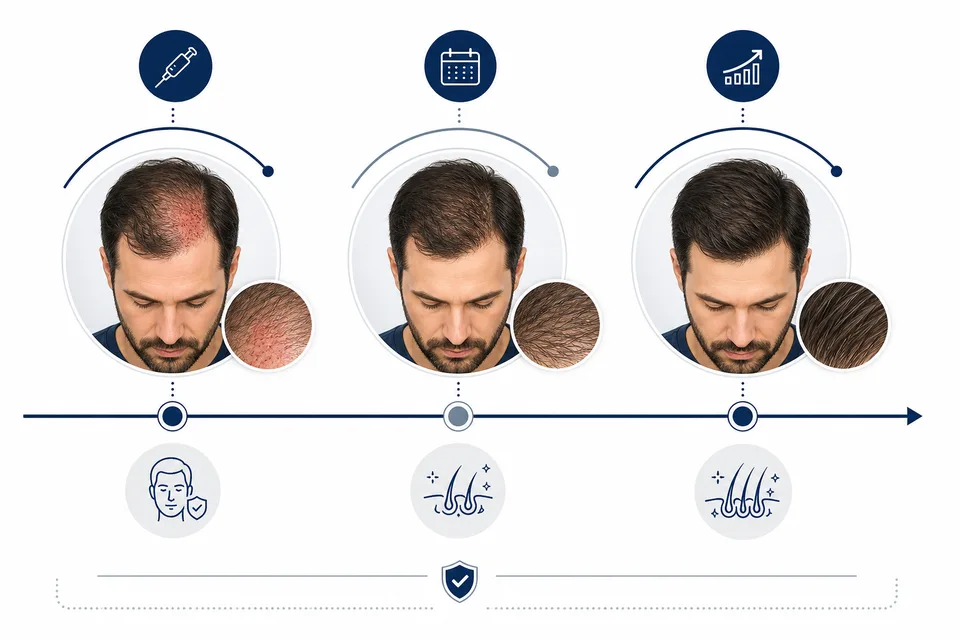
A typical course involves multiple sessions spaced several weeks apart, with maintenance intervals discussed individually. We do not publish fixed session packages online; your plan depends on pattern of loss, goals, and clinical judgement.
PRP at HTC — standalone and alongside surgery
We use PRP in two distinct ways depending on what is right for you.
Standalone scalp injections — for patients exploring non-surgical support who are suitable after assessment. Sessions are at our UK clinics in Manchester, Birmingham, Bristol, London, and Walsall.
Intraoperative PRP — for surgical patients, PRP may be discussed as part of transplant planning (for example graft storage or scalp injection at transplantation). Nothing is added without your understanding and agreement.
Read our evidence-led guide: PRP for hair loss — what the evidence says.
Recovery and aftercare
Most patients return to desk-based work and normal activity the same day. Mild tenderness, redness, or pinpoint bruising at injection sites may occur and usually settles within 24–48 hours.
Written aftercare instructions are provided. Progress is reviewed against expectations set at the start — HTC includes structured follow-up as part of your care pathway where clinically indicated.
Honest expectations
- PRP is not a cure for hair loss and does not work for everyone
- It is not a replacement for hair transplant when permanent redistribution of follicles is the goal
- Results vary — we do not quote single “% improvement” figures in marketing copy
- Protocols differ between clinics; centrifuge settings, depth, and session spacing affect outcomes
- Combining treatments (for example PRP with minoxidil) may be discussed when clinically appropriate — sequencing matters
Frequently asked questions
How much does PRP hair treatment cost in the UK?
Cost depends on your pattern of loss, the course recommended, and whether PRP is standalone or part of a wider plan. HTC discusses personalised pricing after a free consultation — we do not publish fixed menu prices online. No hidden fees.
How many PRP sessions will I need?
Protocols differ between patients. A typical initial course is often three to four sessions spaced four to six weeks apart, with maintenance discussed individually. Your clinician confirms spacing at consultation — we do not apply a one-size-fits-all package.
Can I combine PRP with minoxidil or other treatments?
Sometimes, when clinically appropriate. Research explores combinations such as PRP with minoxidil or medical therapy alongside surgery — but sequencing matters. HTC plans treatment on clinical grounds, not upsell; suitability is confirmed at assessment.
How is PRP different from a hair transplant?
A hair transplant surgically moves follicles from a donor area to areas of loss. PRP is a non-surgical injection aimed at supporting the existing follicle environment — it does not replace lost or transplanted follicles. In some cases the two can complement each other; your consultation clarifies which pathway fits your goals.
Is PRP safe?
Because PRP uses your own blood, allergic reaction risk is low. Injection still carries risks such as bruising, infection, or discomfort — which is why medical history and scalp assessment are required before treatment. We apply topical numbing where appropriate to keep sessions manageable.
Is PRP worth it for hair loss?
For suitable patients, yes — with realistic expectations. Studies suggest PRP may improve hair density and count in androgenetic alopecia for some people, particularly earlier-stage loss, but results vary and protocols differ between clinics. PRP is not a replacement for transplant; suitability is decided in consultation, not from a generic ad.
Understand whether PRP / PRF is appropriate for you
Free, no obligation. We will assess your hair loss pattern, explain what supportive treatment can and cannot achieve, and outline a plan only if it is clinically appropriate.
Results evidence
Documented cases.
Before-and-after photography is published only with patient consent and clinician review. Individual results vary and are discussed through consultation.
Published cases will appear here once consent and clinician review are complete.
Individual results vary. Images are published with patient consent only.
Free consultation
Start with clinical clarity.
Book a free consultation to discuss suitability, treatment options, and personalised next steps with a clinician-led clinic.
Confidential enquiry. No obligation. Pricing is personalised after consultation.