
Prescription treatment
Oral Minoxidil for Hair Loss UK
A prescription option for selected patients — assessed and monitored by our clinical team, with realistic expectations set at a free consultation before you start.

In brief
Oral minoxidil is a low-dose tablet form of a well-established hair loss treatment, reaching follicles via the bloodstream. Evidence suggests it can be an effective option for pattern hair loss in selected patients when prescribed and monitored by a clinician — but it is not suitable for everyone, results vary, and treatment works while you continue it.
What is oral minoxidil?
Minoxidil has been used to treat pattern hair loss for decades — most often as a liquid or foam applied to the scalp. Oral minoxidil is taken as a low-dose tablet, absorbed into the body, and reaches the hair follicle via the bloodstream.
Minoxidil is recommended in international clinical guidelines for pattern hair loss. The oral form has attracted growing clinical interest because it removes the issue of inconsistent scalp application — a recognised limitation of topical use.
At HTC, oral minoxidil is one option within a broader, personalised plan. It is not sold over the counter. It requires a clinical assessment before it can be prescribed and is monitored by our team throughout.

What the research shows
The evidence base for low-dose oral minoxidil has grown over the last decade. An honest summary for patients considering treatment:
- Evidence suggests low-dose oral minoxidil is an effective option for male pattern hair loss in selected patients, when assessed and prescribed by a clinician
- A large study of over 1,400 patients found that low-dose oral minoxidil did not cause clinically significant blood pressure changes in otherwise healthy adults — though medical assessment remains essential before starting
- Research is promising and clinical interest continues to grow — but oral minoxidil is not a cure; it works while you take it and results vary between patients
Our team will give you a realistic picture of what to expect for your situation at consultation — not a guarantee of your personal outcome.
Who may oral minoxidil suit?
Oral minoxidil is a prescription medication — not suitable for everyone, and it requires medical assessment before starting. Common reasons it is discussed after assessment include:
- Male pattern hair loss (androgenetic alopecia) at an early-to-moderate stage
- Difficulty using topical minoxidil consistently (irritation, greasiness, or application routine)
- Non-surgical support within a wider hair restoration plan
It may not be appropriate if you have a history of cardiovascular or blood pressure conditions, certain other medical conditions or medications, or contraindications identified in review. This is not an exhaustive list — your consultation is where suitability is decided.
What to expect at HTC
Free consultation — your hair loss history, current pattern, and overall health are reviewed. No pressure and no obligation; this conversation determines whether oral minoxidil is appropriate and how it fits your wider plan.
Prescription and plan — if it is right for you, a prescription is issued by our qualified clinical team. We explain how to take it, what to expect in the first weeks, and what to watch for.
Structured aftercare — HTC patients receive 12 months of structured aftercare. We monitor progress, adjust the plan if needed, and are available between appointments if you have questions or concerns.
Side effects — an honest picture
We believe you should understand potential side effects before starting any treatment. Commonly reported effects include:
- Hypertrichosis (unwanted hair growth elsewhere, particularly face and body) — the most frequently reported side effect in studies; generally manageable and often resolves if treatment is stopped
- Fluid retention — mild ankle swelling in some patients, usually at higher doses
- Headache and dizziness — typically mild and more common in the first weeks
- Fatigue — reported by a minority of patients
Heart rate changes are less common at low doses but more relevant if you have pre-existing cardiovascular conditions. Medication interactions are reviewed as part of your assessment. The study of over 1,400 patients matters — it does not mean the drug is without risk for everyone, which is why assessment comes first.
If you experience unexpected symptoms after starting, our aftercare team is available to advise. We do not prescribe and disappear.
Honest expectations
- Oral minoxidil is not suitable for everyone — prescription and monitoring are required
- It is not a cure — hair loss typically resumes if you stop treatment over time
- Results vary — we do not guarantee density or regrowth for every patient
- Evidence suggests outcomes are broadly comparable to topical minoxidil in controlled settings — oral is not demonstrably superior, but may be more practical if topical use is inconsistent
- Personalised pricing is discussed after consultation — we do not publish fixed menu prices online
Frequently asked questions
Is oral minoxidil safe?
Oral minoxidil is a prescription medication, which means it is not suitable for everyone and requires medical assessment before starting. A study of over 1,400 patients found that low-dose oral minoxidil did not cause clinically significant blood pressure changes in otherwise healthy adults — however, patients with cardiovascular or blood pressure conditions require particularly careful review. Safety depends on your individual health profile, which is why a consultation with our clinical team is the starting point.
How is oral minoxidil different from topical minoxidil?
Topical minoxidil is applied directly to the scalp; oral minoxidil is taken as a tablet. Both work by extending the active growth phase of the hair cycle and increasing blood supply to follicles. Evidence suggests comparable efficacy, and some patients find the oral route easier to use consistently — avoiding scalp irritation or greasiness associated with topical application. Your clinician will help you weigh the options for your situation.
How long before I see results?
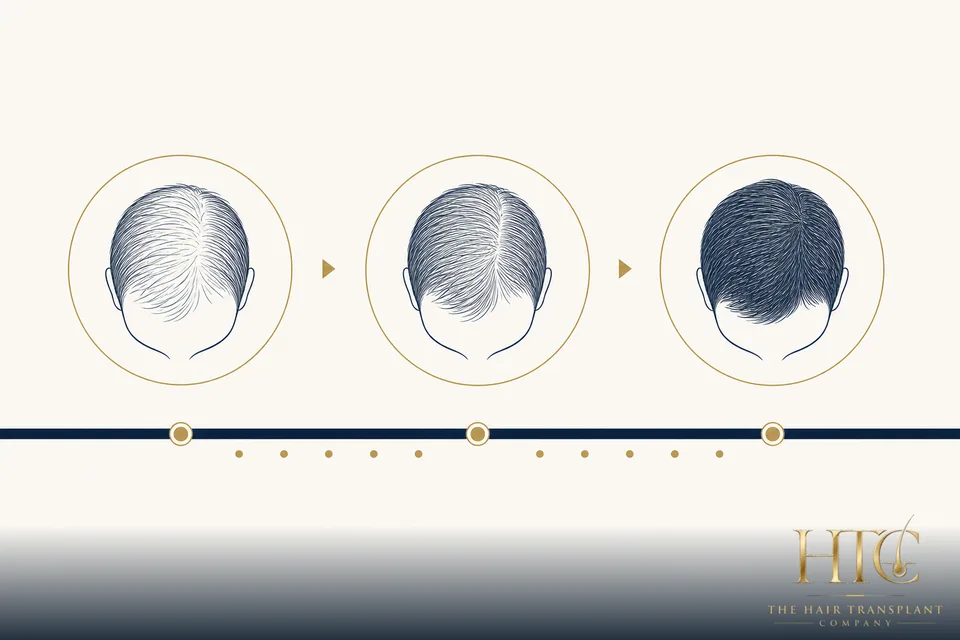
Hair growth is slow. Most patients who respond to oral minoxidil begin to notice changes between three and six months. A full assessment of response is typically made at 12 months. Your clinician will set realistic expectations at consultation rather than promising a quick fix.
Can women take oral minoxidil?
Female pattern hair loss is a recognised condition and oral minoxidil is used in some clinical contexts for women. At HTC, our primary treatment population for this medication is male patients. If you are a woman experiencing hair loss, please book a consultation — we will assess your situation honestly and discuss whether any of our treatments are appropriate for you.
Do I have to take it forever?
Oral minoxidil works while you take it. If you stop, hair loss typically resumes over a period of months — as with most medical hair loss treatments. Long-term use means long-term monitoring, which is part of what our 12-month aftercare structure covers. This is discussed before prescribing so you can make an informed decision.
How much does oral minoxidil cost at HTC?
There is no single published price. Cost depends on your clinical picture and how oral minoxidil fits your wider plan. Your free consultation includes examination and indicative pricing for a personalised approach — we do not publish fixed menu prices online. No hidden fees.
Understand whether oral minoxidil is appropriate for you
Free, no obligation. We will assess your hair loss pattern, medical history, and goals — and outline a prescription plan only if it is clinically appropriate.
Results evidence
Documented cases.
Before-and-after photography is published only with patient consent and clinician review. Individual results vary and are discussed through consultation.
Published cases will appear here once consent and clinician review are complete.
Individual results vary. Images are published with patient consent only.
Free consultation
Start with clinical clarity.
Book a free consultation to discuss suitability, treatment options, and personalised next steps with a clinician-led clinic.
Confidential enquiry. No obligation. Pricing is personalised after consultation.